Game Rules
These are short descriptions of rules and how to play each game in my top 10 list.
These are short descriptions of rules and how to play each game in my top 10 list.

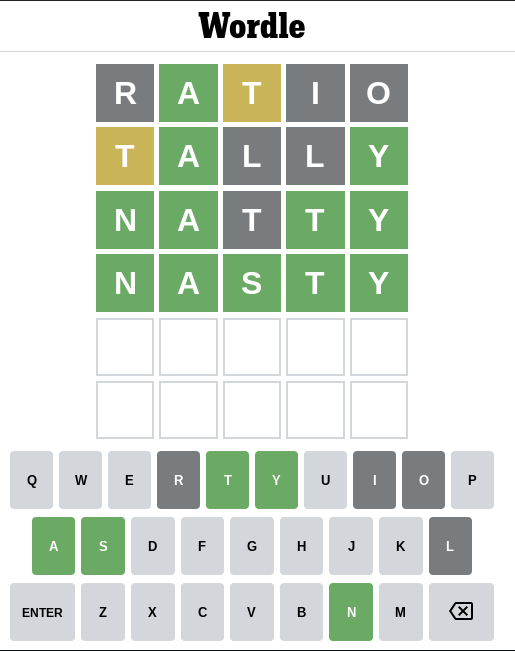
Wordle is a daily word puzzle where the player has six chances to guess a hidden five-letter word. Each time you enter a guess, the game gives feedback by coloring the letters: green means the letter is correct and in the right position, yellow means the letter is in the word but in the wrong position, and gray means the letter does not appear in the word at all. Using these clues, you refine your guesses until you either solve the word or run out of attempts. The goal is to figure out the secret word in as few guesses as possible.
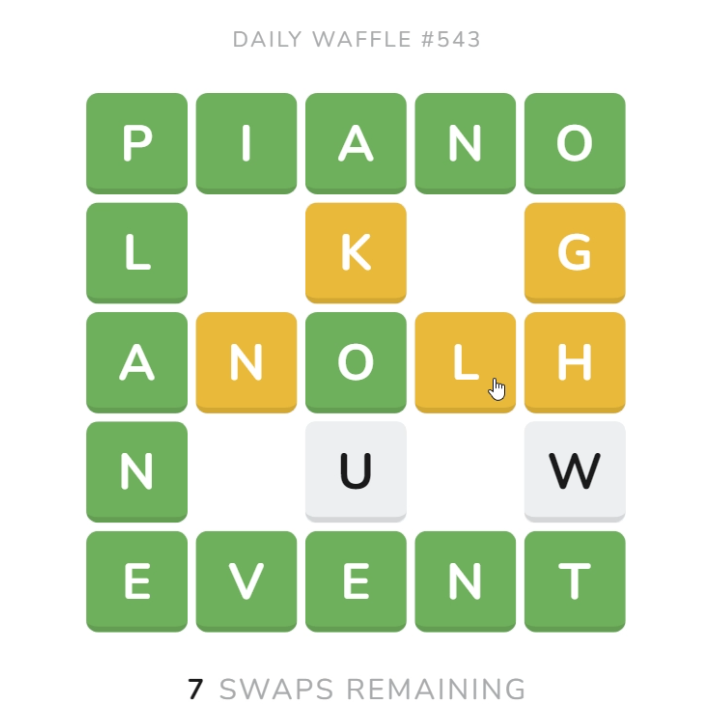
Waffle is a word puzzle game where you rearrange letters to form words on a grid. The game starts with a 6×6 grid of scrambled letters that form several overlapping words horizontally and vertically. Your goal is to swap letters by clicking two at a time to place them in the correct position so that all words are spelled correctly. Each swap counts as a move, and the fewer moves you use, the better your score. Tiles change color as hints: green means the letter is in the correct spot, yellow means it’s in the word but the wrong spot, and gray means it’s not in that word’s position. The objective is to solve the entire grid within the allowed number of moves.

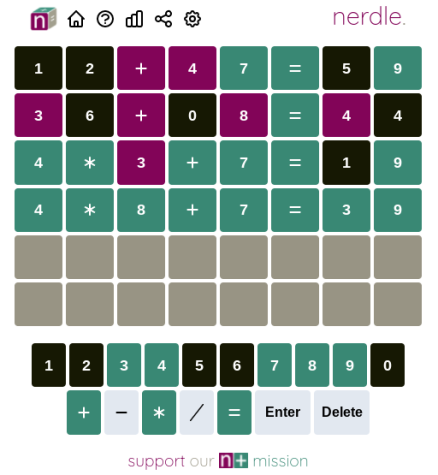
Nerdle is a daily puzzle game similar to Wordle, but instead of guessing a word, you guess a math equation. You have six tries to enter a valid equation using numbers and symbols. After each guess, the tiles change color to give feedback: green means the character is correct and in the right position, purple means it appears somewhere else in the equation, and black means it isn’t used at all. Every guess must be a mathematically correct equation (like 8+4=12). Using the color clues, you adjust your next guesses until you find the exact equation. The goal is to discover the correct equation within six attempts.

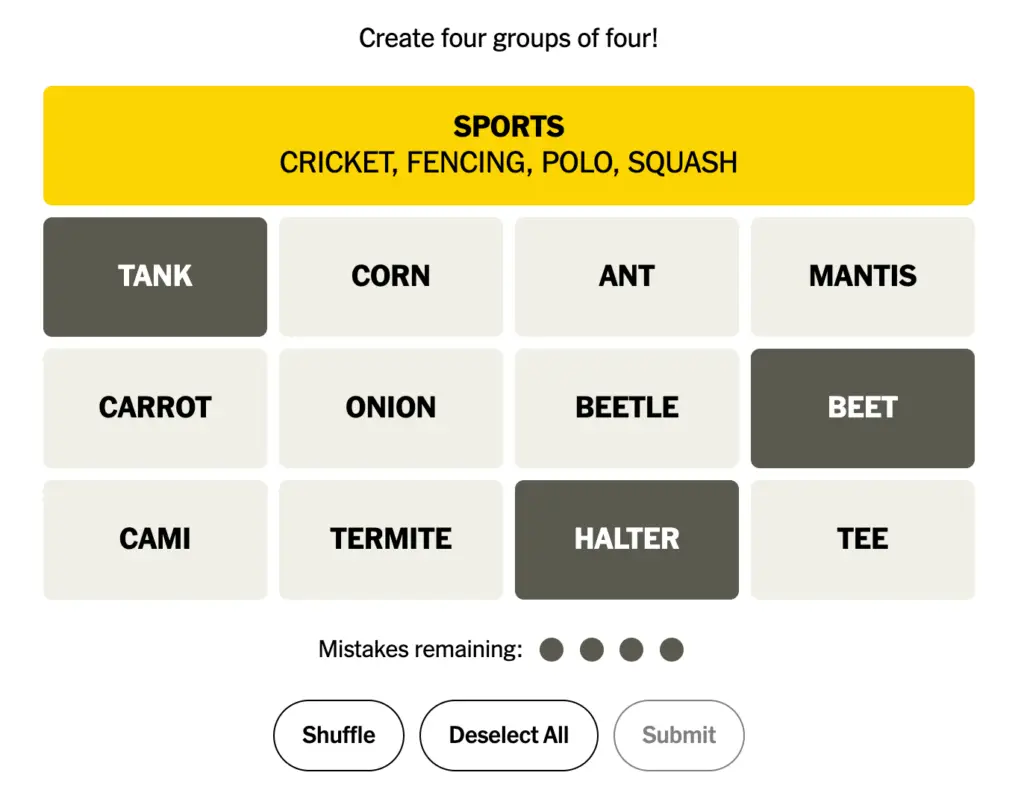
Connections is a puzzle game where the goal is to sort a set of 16 words into four groups of four based on what they have in common. Players drag or select words they think belong together, and when a correct group is completed, it’s locked in place. The game provides limited guesses or tries, so you need to find all four groups using logic and pattern recognition. The challenge is identifying the connections between words, and the objective is to correctly sort all words into their groups in as few attempts as possible.

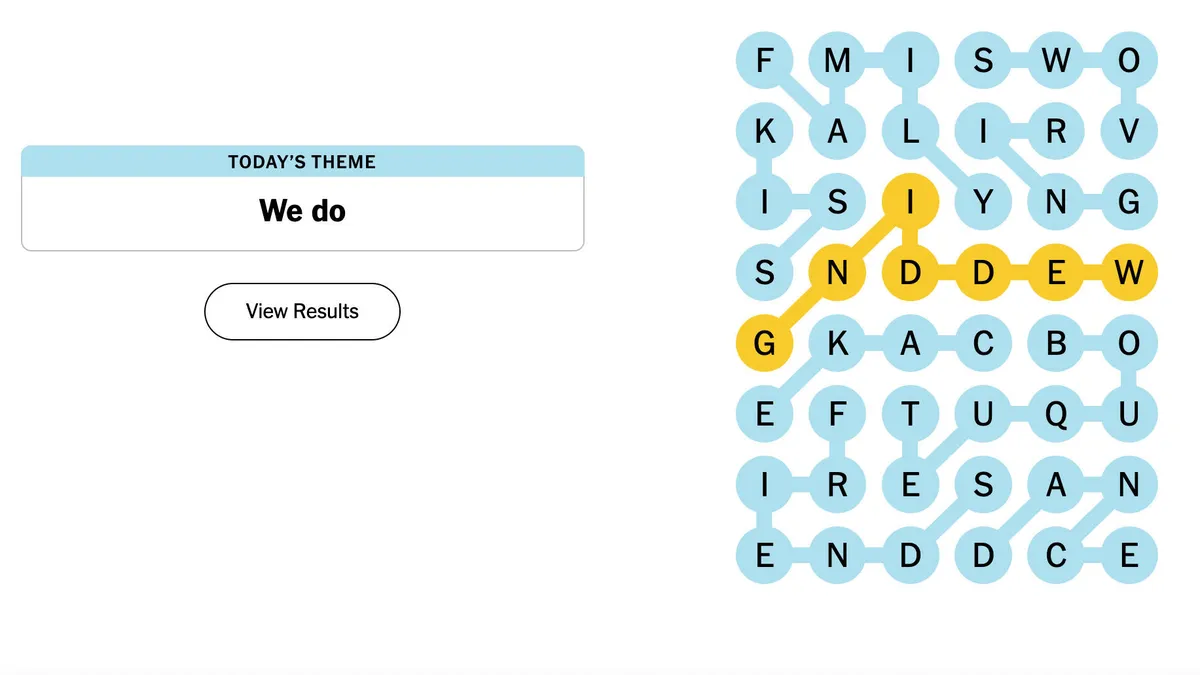
Strands is a puzzle game where the goal is to connect matching colored dots on a grid without crossing the lines. Each pair of same-colored dots must be joined by a continuous path, called a strand, that fills the grid. All squares on the grid must be covered by the strands, and paths cannot overlap. The challenge is to figure out the correct arrangement of strands so that every dot is connected and the entire grid is filled. The objective is to complete the puzzle using logical planning and spatial reasoning.

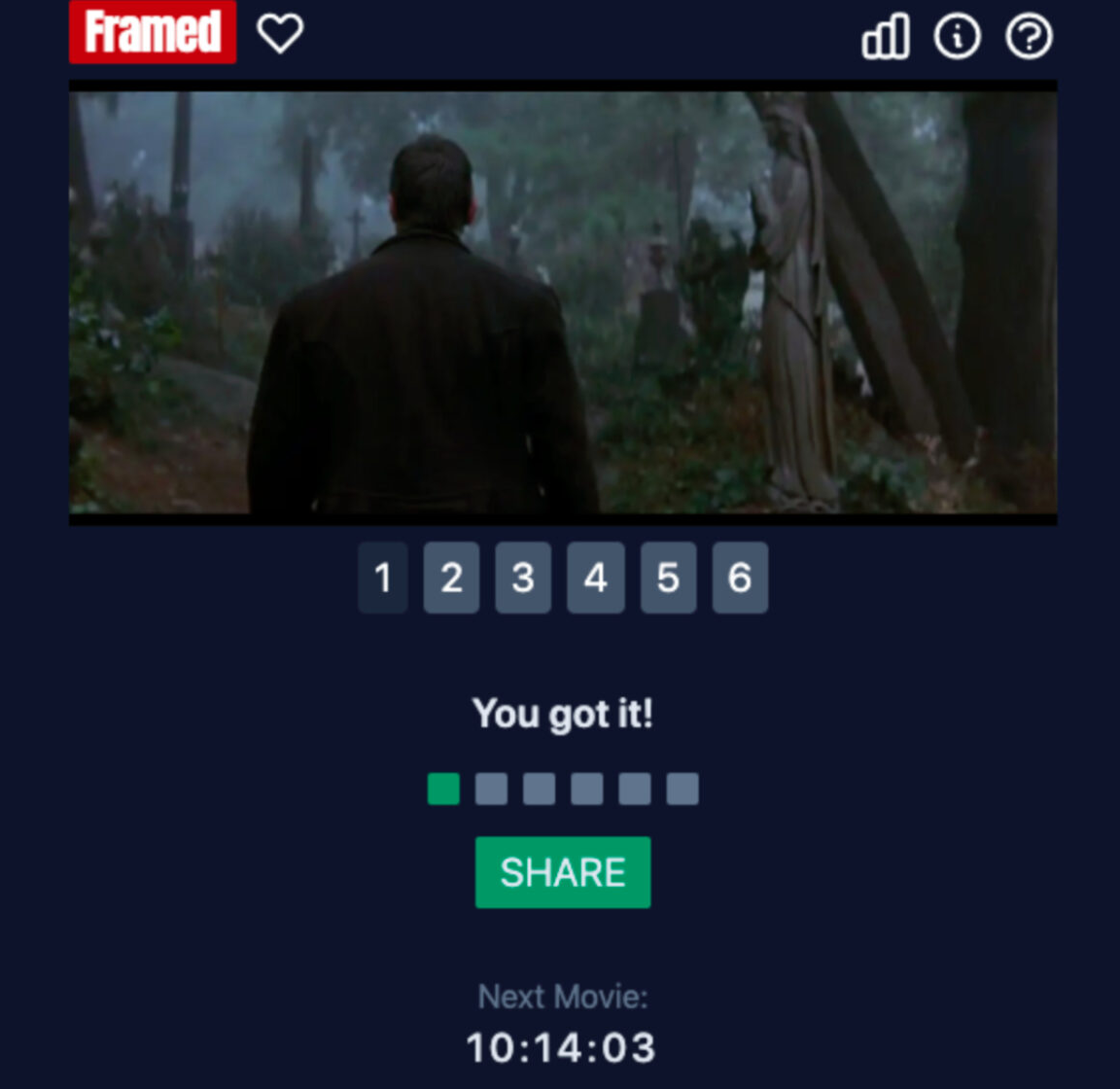
Framed is a daily visual trivia puzzle where your goal each day is to guess the title of a movie based on a series of still frames from that film. When you start a new puzzle, you’re shown the first image from the movie. You have up to six attempts to enter the correct film title — each time you guess incorrectly, the game reveals another still frame from the same movie to give you more clues. You keep guessing until you either identify the film within six tries or run out of guesses. The fewer guesses you need, the better your score, and a new movie challenge appears every day.

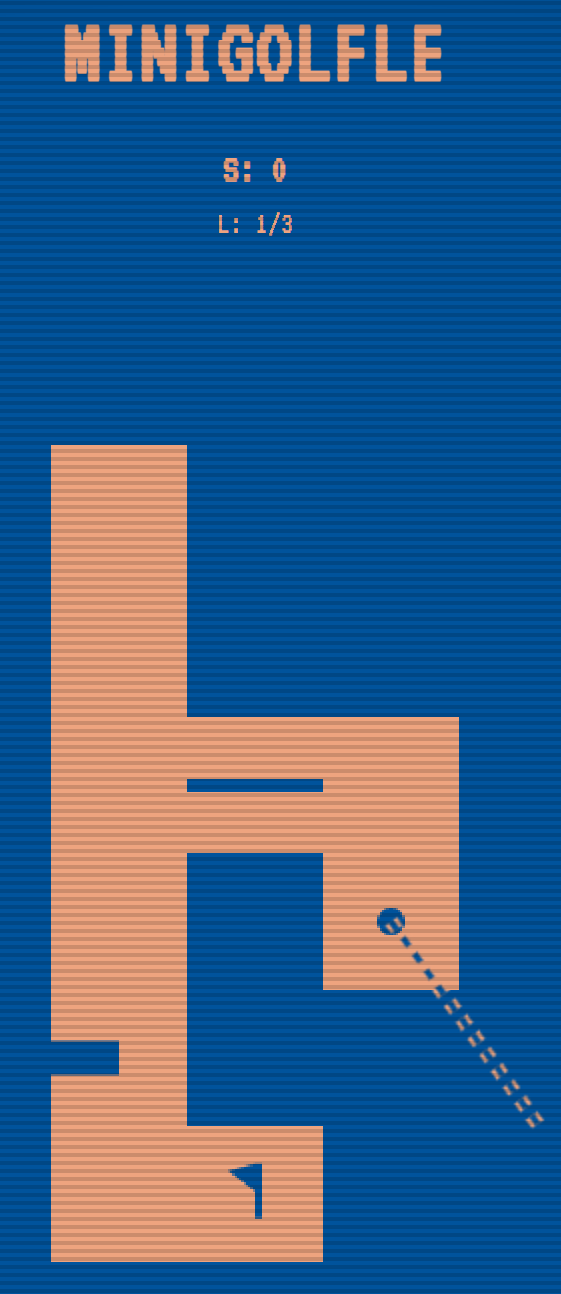
Minigolfle is a daily mini‑golf style puzzle where your goal is to get the golf ball from the starting point into the hole (the flag) on a 2D course using as few strokes as possible. To play, you aim and set the power of your shot by clicking or touching the ball and dragging away from it — the longer the drag line, the more power you give the shot — then release to strike the ball. You must plan the angle and strength carefully so the ball rolls, bounces, or navigates obstacles to reach the flag before running out of allowed strokes for that level. It’s all about precision aiming, choosing the right power, and thoughtful planning to sink the ball into the hole.

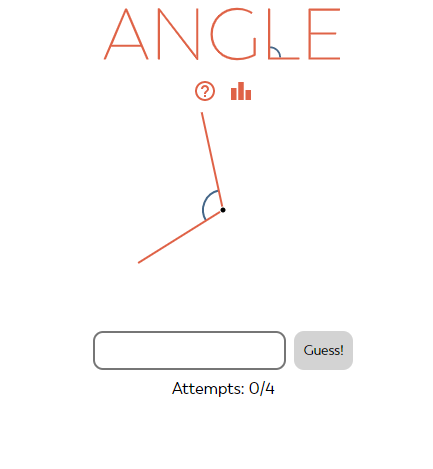
Angle is a daily guessing game where you try to figure out the exact measurement of an angle presented visually on the screen. Each day there’s a new angle to solve, and you have a limited number of guesses (commonly four tries) to identify the correct number of degrees (between 0° and 180°). After each guess, the game gives you feedback showing whether your guess was too high or too low and often hints about how close you are. You use that feedback to refine your next guess. The goal is to find the correct angle within the allowed attempts, and then wait for the next day’s challenge!

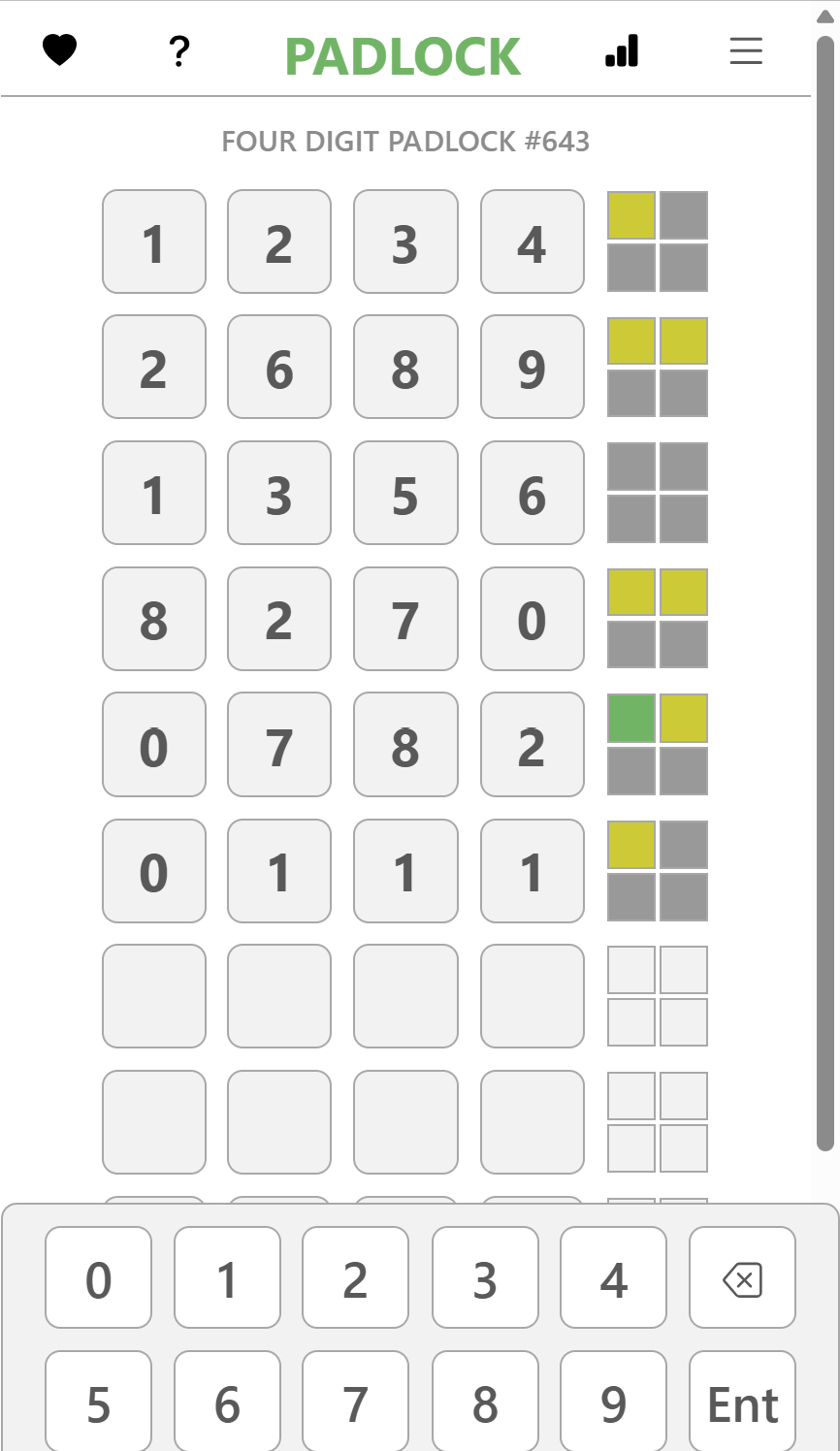
Padlock is a daily number‑based puzzle where your goal is to crack a secret 4‑digit code using logic and deduction. Each day presents a new mysterious combination that you must guess in 10 attempts or fewer by entering guesses made up of four digits. After each guess you get feedback that helps you narrow down the correct code (similar to how Mastermind works): digits that are correct and in the right position are highlighted one way, digits that are in the code but in the wrong spot are highlighted another way, and digits not in the code at all are indicated as such. Using those clues, you refine your next guesses until you either find the exact 4‑digit combination or run out of attempts. The aim is to deduce the correct code within the allowed tries each day.

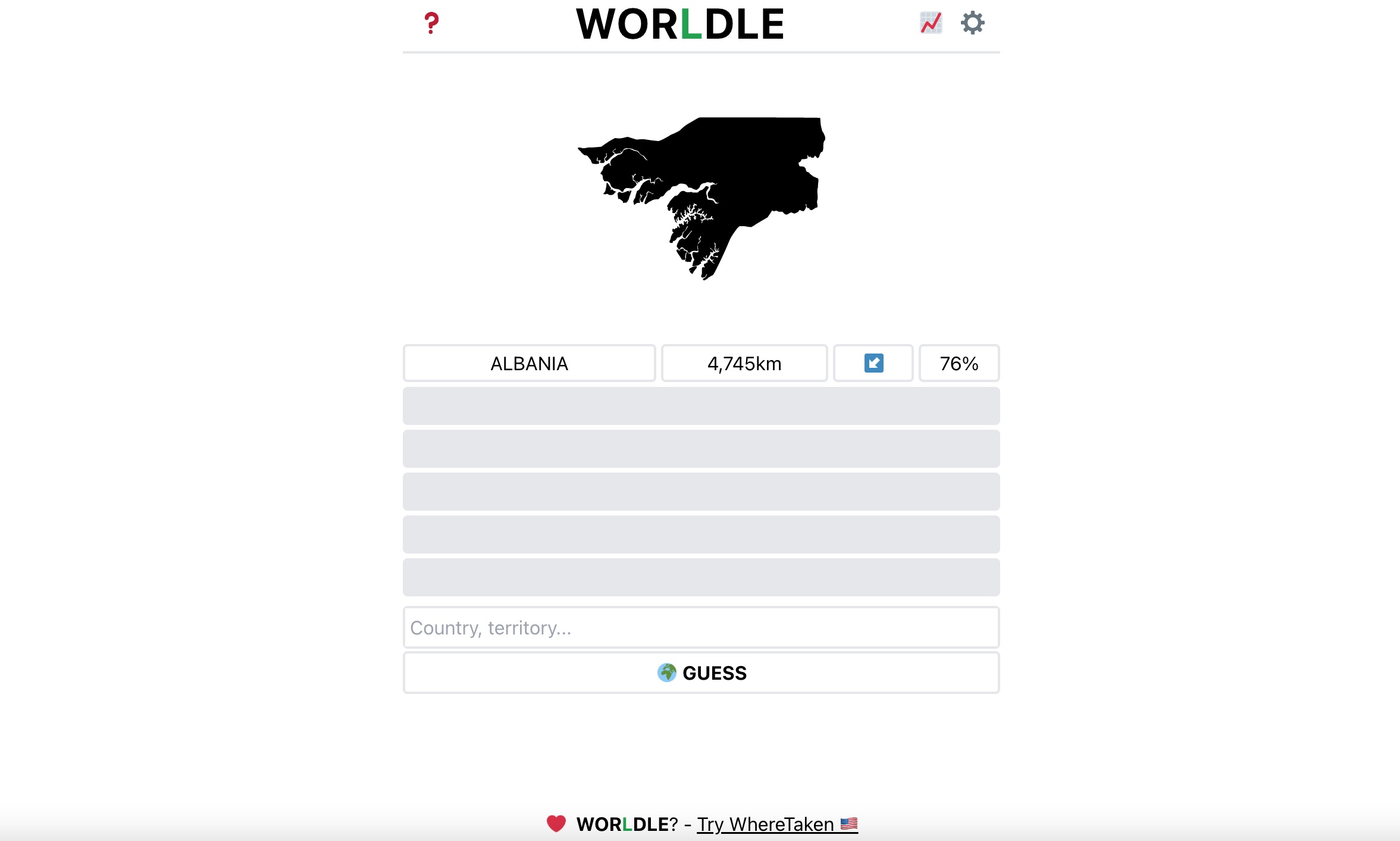
Worldle is a daily geography guessing game where the goal is to identify a country or territory based on its shape. Each day, a new country silhouette is shown, and you have six guesses to name it. After each guess, the game gives feedback: it shows the distance and direction from your guess to the correct country, helping you narrow down your next choice. The challenge is to use geographic knowledge and reasoning to figure out the correct country within the allowed guesses.